





Emilia-Romagna
Practical guide to mushrooms in Emilia-Romagna: Porcini, Chanterelles, and Caesar's Mushroom. Key habitats include Monte Cimone: beech forest and mixed woods (1000-1800m) and Corno alle Scale: beech forest. Interactive forest map with weather data.
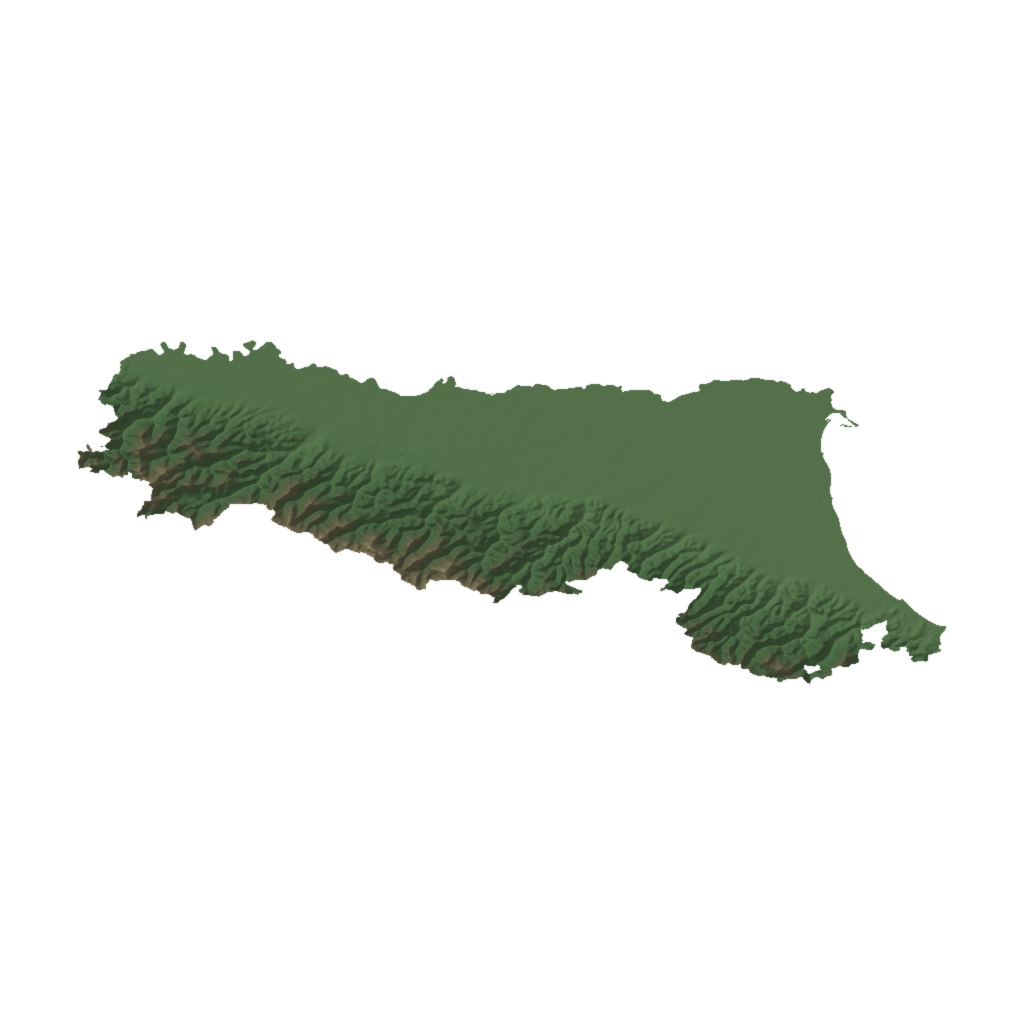
Emilia-Romagna is one of the most useful Italian regions to read directly on the map for mushroom trips. The main reference habitats are Monte Cimone: beech forest and mixed woods (1000-1800m) and Corno alle Scale: beech forest. The season to watch first is June–October (porcini estivi da giugno; autunnali da settembre), with the most reliable elevations usually between 600–1800m. The species to prioritise are Porcini, Chanterelles, Caesar's Mushroom, and Horn of Plenty.
Habitats and key forests
- Monte Cimone: beech forest and mixed woods (1000-1800m)
- Corno alle Scale: beech forest
- Val Savio and Val Bidente: Apennine mixed woods
- Parma and Piacenza Apennines: chestnut woods and beech forests
Species to target in Emilia-Romagna
Porcini
Boletus edulis e specie affini
Porcini prefer conifer forests (fir, Scots pine, larch) for B. pinophilus; broadleaf forests (beech, chestnut) for B. edulis; thermophilous oak forests (holm oa…
Full guide →Chanterelles
Cantharellus cibarius
Chanterelles prefer broadleaf forests — oak, beech, birch, chestnut — with moderately acid soil and good canopy cover. They avoid compact soils and waterlogged …
Full guide →Caesar's Mushroom
Amanita caesarea
Downy oak, Turkey oak, holm oak and chestnut forests between 200 and 900 metres. Acid, well-drained soil. Warm climate with moderate summer rainfall. In central…
Full guide →Horn of Plenty
Craterellus cornucopioides
Mature beech forests between 700 and 1400 metres, typically on very thick humus with leaf litter. Often grow near mature beeches in poorly-drained areas. The so…
Full guide →Mushroom map for Emilia-Romagna
Mushroom map for Emilia-Romagna
Explore potentially favourable areas in Emilia-Romagna, already centred on the region and the porcini model.
Frequently asked questions about mushrooms in Emilia-Romagna
- When is mushroom season in Emilia-Romagna?
- The first window to monitor in Emilia-Romagna is June–October (porcini estivi da giugno; autunnali da settembre). Start by checking recent rainfall, then focus on the elevations and forest belts that stay stable after wet periods.
- Where should you start on the map in Emilia-Romagna?
- Start from Monte Cimone: beech forest and mixed woods (1000-1800m) and Corno alle Scale: beech forest. Those are the most readable habitats on the forest map and usually the fastest way to narrow the search area.
- Which species are the best signal in Emilia-Romagna?
- The clearest species to track here are Porcini, Chanterelles, and Caesar's Mushroom. Use the species guides together with the forest layer to move from generic scouting to a precise plan.