





Tuscany
Practical guide to mushrooms in Tuscany: Porcini, Chanterelles, and Black Truffle. Key habitats include Camaldoli forest and Casentino: historic beech forest and Monte Amiata: beech forests on volcanic soil (700-1700m). Interactive forest map with weather data.
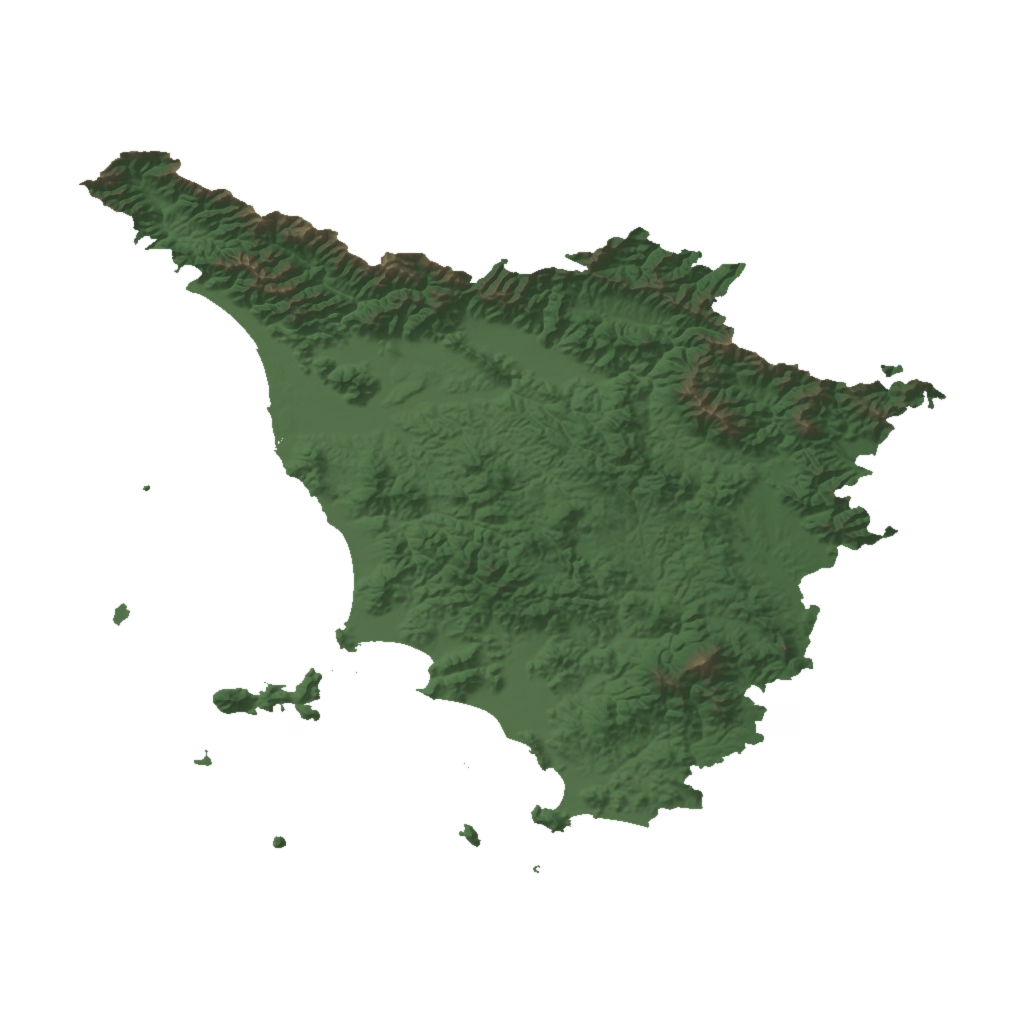
Tuscany is one of the most useful Italian regions to read directly on the map for mushroom trips. The main reference habitats are Camaldoli forest and Casentino: historic beech forest and Monte Amiata: beech forests on volcanic soil (700-1700m). The season to watch first is June–July (summer porcini); September–November (autumn), with the most reliable elevations usually between 300–1700m. The species to prioritise are Porcini, Chanterelles, Black Truffle, and Caesar's Mushroom.
Habitats and key forests
- Camaldoli forest and Casentino: historic beech forest
- Monte Amiata: beech forests on volcanic soil (700-1700m)
- Lunigiana and Garfagnana: chestnut woods and beech forests
- Mugello: mixed woods and Apennine beech forests
Species to target in Tuscany
Porcini
Boletus edulis e specie affini
Porcini prefer conifer forests (fir, Scots pine, larch) for B. pinophilus; broadleaf forests (beech, chestnut) for B. edulis; thermophilous oak forests (holm oa…
Full guide →Chanterelles
Cantharellus cibarius
Chanterelles prefer broadleaf forests — oak, beech, birch, chestnut — with moderately acid soil and good canopy cover. They avoid compact soils and waterlogged …
Full guide →Black Truffle
Tuber melanosporum e T. aestivum
Forests of downy oak, holm oak and hornbeam on calcareous soils. Well-drained soil with slightly alkaline pH. The presence of 'burnt patches' (areas with suppre…
Full guide →Caesar's Mushroom
Amanita caesarea
Downy oak, Turkey oak, holm oak and chestnut forests between 200 and 900 metres. Acid, well-drained soil. Warm climate with moderate summer rainfall. In central…
Full guide →Mushroom map for Tuscany
Mushroom map for Tuscany
Explore potentially favourable areas in Tuscany, already centred on the region and the porcini model.
Frequently asked questions about mushrooms in Tuscany
- When is mushroom season in Tuscany?
- The first window to monitor in Tuscany is June–July (summer porcini); September–November (autumn). Start by checking recent rainfall, then focus on the elevations and forest belts that stay stable after wet periods.
- Where should you start on the map in Tuscany?
- Start from Camaldoli forest and Casentino: historic beech forest and Monte Amiata: beech forests on volcanic soil (700-1700m). Those are the most readable habitats on the forest map and usually the fastest way to narrow the search area.
- Which species are the best signal in Tuscany?
- The clearest species to track here are Porcini, Chanterelles, and Black Truffle. Use the species guides together with the forest layer to move from generic scouting to a precise plan.